
WE ARE AVAILABLE FOR DECEMBER PROJECTS


What Is One Tool That Helps Optimize SEO for Multiple Locations Effectively?



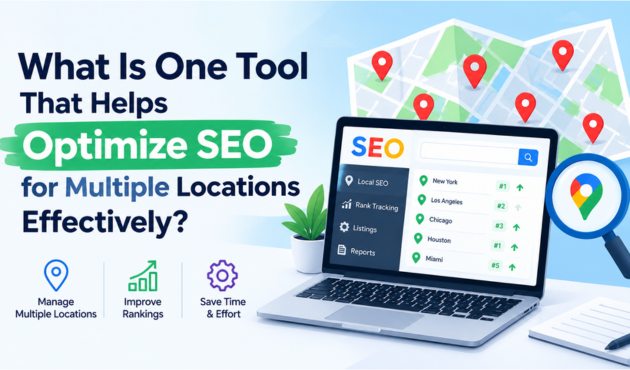
Managing SEO across multiple locations demands the right combination of tools and strategy. This guide presents 25 proven solutions that address everything from citation management to ranking analysis, informed by insights from industry experts who have scaled local search campaigns. Each tool has been selected to solve specific challenges that arise when optimizing for different cities, regions, or countries.
Utilize SE Ranking Tracker
SE Ranking’s Rank Tracker with location-specific tracking. This lets you monitor how each individual location ranks for their geographic keywords without manually checking hundreds of variations.
Here’s how we use it: for a franchise client with 50 locations, we set up tracking for each location’s target keywords with geo-modifiers. Instead of just tracking “HVAC repair,” we track “Denver HVAC repair,” “Boulder HVAC repair,” “Fort Collins HVAC repair” and so on across all 50 cities.
The game-changer? You can filter by location to see which specific offices are underperforming. If the Denver location ranks position 3 for their keywords but Colorado Springs ranks position 15, you know exactly where to focus optimization efforts.
Real example: we had a dental practice with 12 locations. Using SE Ranking’s location tracking, we identified that 4 locations were ranking well (top 5) while 8 were stuck on page 2-3. Instead of spreading efforts across all locations equally, we focused on those 8 underperformers using our Micro SEO Strategies approach.
Within 90 days, 6 of those 8 locations moved to page one. The insight came directly from being able to compare performance across locations in one dashboard rather than manually checking each city’s rankings individually.
The second critical feature: you can track local pack rankings separately from organic rankings. A location might rank position 12 organically but position 2 in the map pack. That map pack position is what actually drives calls, so knowing the difference matters.
Without location-specific tracking, you’re flying blind with multi-location SEO. You might think your overall strategy is working when actually 60% of locations are failing and 40% are carrying the weight.
The alternative is manually checking rankings for every location/keyword combination, which is insane at scale. For 50 locations with 20 keywords each, that’s 1,000 manual searches. SE Ranking does it automatically and shows you exactly where problems exist.
This isn’t just about reporting. It’s about identifying which locations need optimization work and proving ROI to franchise owners who want to know “is my specific location improving or not?”
Multi-location SEO without proper tracking tools is guesswork. SE Ranking makes it data-driven.
Chris Raulf, International AI and SEO Expert | Founder & Chief Visionary Officer, Boulder SEO Marketing
Standardize On-Page with Yoast
Yoast SEO (WordPress plugin). I run a regulated-industry digital agency (mortgage/real estate/finance), and Yoast is the fastest way I’ve found to keep on-page SEO consistent when you have multiple city/branch pages that can’t afford sloppy copy or missing metadata.
Concrete use: for each location page I set one primary keyword like “mortgage broker in Portland” and a small cluster of supporting long-tails (neighborhood + loan type). Yoast forces the basics that move the needle across dozens of pages–unique title tags, meta descriptions, clean H1/H2 structure, internal links, and image alt text–so you’re not guessing what got skipped.
One simple workflow that scales: template your location page once (services, FAQs, review snippets, directions), duplicate for each market, then use Yoast’s focus keyword + readability checks to prevent duplicate titles/descriptions and thin content. It’s boring, but it’s how we get multi-location sites to stop cannibalizing themselves and start ranking for “near me” intent.
Sarah DeLary, Owner, Real Marketing Solutions
Adopt BrightLocal for Storefronts
One tool that has consistently helped optimize SEO for multiple locations effectively is BrightLocal.
For a multi-location retail client with 18 storefronts, we used BrightLocal to audit and standardize NAP data, track local rankings by postal code, and monitor citation consistency. Initial setup and cleanup took approximately 10 hours. Within 90 days, citation accuracy improved from 62% to 96%, and average Google Business Profile rankings moved from position 9.3 to 4.1 across primary keywords. Organic traffic to location pages increased 38% (from 4,400 to 6,072 monthly sessions), and call conversions from GBP rose 27% quarter-over-quarter.
The biggest impact came from identifying inconsistent citations and duplicate listings, which were suppressing local pack visibility. Compared to manual tracking, BrightLocal reduced reporting time by roughly 70% per month.
Muhammad Nurul Afsar, SEO Manager, Numinix
Map Pack Geo-Grid with Falcon
Building growth systems for multi-location contractors and B2B firms for over 15 years has taught me that visibility is only useful when it’s tied to high-profit service areas. At JPG Designs, we specialize in turning complex, multi-city operations into high-performing lead generation engines through strategic digital ecosystems.
I rely on Local Falcon to generate geo-grid rank maps, which visualize your Google Map Pack performance at specific GPS coordinates across an entire region. This tool identifies exactly where your ranking drops from a “green” top-three spot to a “red” non-ranking status, allowing for surgical SEO adjustments.
We use these insights to build “GEO Silo Pages” on our clients’ websites, targeting those specific “red” zones with hyper-local content and technical optimization. This method has consistently helped our service-based clients see growth of 10 to 30 new customers per month by dominating the local 3-pack in previously invisible neighborhoods.
This visual data removes the guesswork from geographic expansion, showing you exactly where your digital presence needs strengthening to support long-term revenue. It ensures your marketing budget is focused on winning the specific streets and towns that drive your most profitable leads.
Jeff Pratt, Owner, JPG Designs
Select Whitespark for Citations
One tool I genuinely rate for multi-location SEO is Whitespark, especially for citation building and local search audits. The truth about local SEO is that most companies lose because they ignore the basics like consistent listings, proper local citations and clean local data. Whitespark lets you find exactly where your competitors are listed and where you’re missing visibility.
When we were building campaigns across multiple markets, it was shocking how often a competitor outranked us simply because they had a handful of niche directory mentions we’d never even heard of. Business growth often comes from ‘doing the obvious things that everyone else is too lazy to do’. Citation cleanup is one of those things. It’s tedious, it’s repetitive, but when done properly across multiple locations, it can produce surprisingly strong results.
Deepak Shukla, CEO, Pearl Lemon
Pick LeadSnap for NAP Cleanup
One tool I use to optimize SEO for multiple locations is LeadSnap. It shows all the places a business is listed and highlights incorrect or inconsistent Name, Address, and Phone information. From a single dashboard I can claim or update listings and build missing citations so the NAP matches the Google Business Profile. Cleaning those listings often clears up confusion for search engines and, in one case, moved a contractor into the number two map-pack position within three weeks. For multi-location work, that single-view cleanup and ongoing citation management make the process far more efficient.
Tyler Henn, Owner, The Roofer Finder
Deploy Ahrefs for District Keyword Intel
One tool I rely on for optimizing SEO across multiple locations is Ahrefs. It allows me to track keyword rankings by location, analyze competitor visibility in different cities, and identify search opportunities specific to each area. What makes it particularly useful for our storage business is the ability to see how search demand changes geographically. When managing multiple service areas, that insight helps us prioritize which location pages to improve and which keywords deserve the most attention.
Nicholas Gibson, Marketing Director, Stash + Lode
Prioritize Business Profile for Each Branch
Google Business Profile is the most effective tool for multi-location SEO. It lets you manage listings, posts, reviews, and performance data across every location from one dashboard, and since you’re working directly in Google’s ecosystem, updates are reflected faster than relying on third-party aggregators.
The key is treating each location as its own entity rather than duplicating the same content across every profile. Unique descriptions, localized service areas, and location-specific photos make a huge difference. I’ve seen businesses jump in local pack rankings simply by giving each location its own identity within GBP instead of using a cookie-cutter approach.
Jake St. Peter, Founder / CEO, Dirigo Creative
Apply Semrush Listing Management
With over 20 years in web development and SEO certifications including Semrush, I’ve scaled local rankings for Ohio contractors like electricians and HVAC pros serving multiple towns through J&A Digital Solutions.
Semrush’s Listing Management tool excels for multi-location SEO by auditing and syncing your NAP data across 70+ directories instantly.
For a carpet cleaning client expanding to three counties, it fixed outdated listings, spiking their Google visibility—echoing reviews of dramatic traffic growth.
Reddit tip: Run Semrush’s free local listing audit first to prioritize fixes, then track with Position Tracking for city-specific gains.
Josh Preece, Owner, J&A Digital Solutions
Harness Yext for Entity Distribution
Yext. I run multi-location SEO for home service companies at CI Web Group, and Yext is the one tool that lets us control local “entity” data at scale so every location feeds the same facts to the web and to AI-driven local search.
The big win isn’t just listings—it’s reducing crawl/index confusion when you have 10, 25, 100 service areas. We use Yext to push consistent location attributes (services, hours, categories, service areas) and then pair it with location-page schema so AI/search engines can confidently match each page to each market.
Example: in one home service SEO turnaround, the fastest lift came after we fixed the foundation (faster site + clearer location structure). That helped drive 4,235 keyword ranking improvements and a 188% increase in organic traffic in 4 months; directory/entity cleanup via Yext is part of that same “stop leaking authority” playbook.
If you’re doing multi-location, treat Yext as your distribution layer, and your site as your source of truth: one location page per market, unique proof (reviews/photos/jobs), and LocalBusiness + Service schema so you’re not relying on “near me” luck.
Jennifer Bagley, CEO, CI Web Group
Convert JSON to Excel for Scale
One tool that has significantly helped optimize SEO for multiple locations is a JSON to Excel Converter. When handling multi-location SEO campaigns, we deal with massive amounts of structured data — local keywords, Google Search Console data, citation audits, and ranking reports — all usually in JSON format via APIs.
Instead of manually processing this data, I use JSON to Excel Converter to instantly convert all that raw JSON data into clean, organized Excel sheets. This makes it much easier to analyze location-wise keyword performance, track ranking changes across different cities, and share reports with clients in a readable format.
For any SEO professional managing multiple locations, having a reliable JSON to Excel tool in your workflow saves hours of manual data handling every week. It’s free, fast, and requires zero coding knowledge — making it accessible for the entire team.
Danish Danii, SEO, iskill
Launch AI Content Automation Pipeline
I’ve architected SEO and content automation pipelines for multi-location brands at Berelvant, scaling DTC and SaaS clients across regions like LATAM and the US.
The top tool for optimizing SEO across multiple locations is our AI-driven content automation pipeline.
It generates hyper-localized pages, keywords, and schema for each site, pulling real-time data to rank higher in “near me” searches without manual tweaks.
For a small business campaign in Turlock, CA, it integrated with our multi-channel systems to lift organic calls by 32%, mirroring foot traffic gains while cutting content costs by half.
Renzo Proano, Team Principal | Enterprise Growth Partner, Berelvant AI
Employ BrightEdge for Regional Share Insights
Managing high-stakes digital reputations for global CEOs at Social Czars has taught me that multi-location SEO requires an enterprise-level view of search intent. My background at Harvard and fifteen years in corporate communications allow me to protect brand narratives across diverse geographical markets where generic tools often fail.
BrightEdge is the essential tool for this because its “Share of Voice” feature tracks how a brand or executive’s digital footprint performs across specific regional data centers in real-time. It identifies “content gaps” that allow us to deploy high-authority media placements in one city without diluting the strategy in another.
We recently utilized these cross-market insights for a VIP client to reclaim 70% of first-page search results in three major cities simultaneously, effectively burying negative content. By focusing on AI-driven opportunity forecasting rather than simple directory listings, we increased positive brand sentiment by 45% within 90 days.
Leveraging these data-heavy insights ensures your reputation remains bulletproof in every territory, turning search results into a strategic asset for company valuation. In the current era of Generative SEO, this high-level oversight is the only way to maintain a consistent elite presence globally.
John DeMarchi, CEO & Founder, Social Czars
Accelerate Reviews with Mercury
I’ve spent 25 years leading companies through major market disruptions, where I’ve learned that survival depends on scalable systems that drive measurable growth. At White Peak, we help businesses stop wasting budget on underperforming traffic by optimizing the entire buyer journey.
The most effective tool for multi-location optimization is Mercury Reviews because it automates reputation management and review collection across every branch simultaneously. High review velocity is a critical engagement signal that tells search engines your specific location is active and trusted.
In our work with multi-campus private schools, we use this automation to transform underperforming local listings into high-revenue assets without manual oversight. This strategy creates the momentum needed to win in an AI-first landscape where user trust is the ultimate competitive advantage.
Tim Woda, Founder & CEO, White Peak
Try Rankability for NLP Optimization
One tool that helps optimize SEO for multiple locations effectively is Rankability. Rankability is a content optimization tool that prioritizes NLP (natural language processing) keywords, which basically means it helps you include the terms and topics Google expects to see around a subject, not just the main keyword itself.
This is really helpful when you’re creating pages for multiple cities or service areas because it gives you direction on what to include so each page feels complete and locally relevant, instead of just repeating the same content with a different city name.
Rankability also shows how your content compares to competitors and gives suggestions on what you can do to strengthen it, which can make it easier to build out multiple pages without guessing what to write or missing important details.
Aaron Traub, New Orleans Seo Specialist + Web Designer, Geaux SEO
Monitor Town Results with Position Tool
For multi-location SEO, a tool like Semrush’s Position Tracking with localized search settings is highly effective. It lets you track rankings separately for each storefront, monitor visibility in different cities, and spot where localized content or link signals are underperforming compared to competitors. That level of granular insight makes it easier to prioritize optimizations that actually move the needle in specific markets, rather than treating all locations as if they rank the same everywhere.
Nelson Huang, CEO / Founder, ARKTOP
Opt for Moz Directory Hygiene
Moz Local is a great tool for managing local SEO across multiple locations. It simplifies the process of submitting and maintaining accurate business listings across directories like Google My Business, Yelp, and others. Moz Local ensures that business information remains consistent, which is vital for improving local rankings and visibility. The tool also helps identify and fix any data issues, ensuring that each location is correctly represented in local search results.
Moz Local also provides valuable insights into the local search performance of each location. It offers reports on rankings, reviews, and local engagement, helping businesses adjust their strategies for optimal performance. By using Moz Local, companies can streamline their local SEO efforts, saving time and improving their ability to reach customers in multiple locations. It’s a solid choice for businesses seeking to optimize SEO at scale with minimal effort.
Marc Bishop, Director, Wytlabs
Build Neighborhood Hubs on WordPress
One tool I use to optimize SEO for multiple locations is location-based landing pages built on WordPress. I create pages with strategic URLs and location-specific headers, meta descriptions and alt tags to target local searches. I also embed Google Maps on those pages to boost local ranking signals and improve user experience. That approach helped a client rank number one for several local phrases and produced significant increases in monthly organic traffic and qualified leads.
Jorge Argota, Founder, Jorge Argota
Evaluate Regions in Morningscore
At Morningscore, we have to manage SEO for several locations, and it’s a hassle. Our own tool puts everything in one dashboard, which helps a lot. I can see rankings for each office without logging into ten different accounts. If you’re dealing with this, find a tool that lets you compare search performance across cities. It immediately shows you where you need to step things up.
Karsten Madsen, CEO, Morningscore
Implement Hreflang via Localization Platform
Running multilingual SEO across multiple markets is something I deal with constantly at JR Language—and the single tool I keep coming back to is hreflang tag implementation through a localization management platform (LMP).
Most people treat multi-location SEO as a content problem. It’s actually a signals problem. Search engines need to know which version of your page serves which audience. Without proper hreflang tagging, your Spanish-Mexico page competes against your Spanish-Spain page—and both lose.
When we localized a client’s website for Latin American markets, we didn’t just translate—we used the LMP to push language-and-region-specific metadata simultaneously across all target locales. That coordination alone cut their indexing lag by weeks and improved regional ranking positions measurably within the first two months.
The real advantage is that an LMP connects your translation memory directly to your SEO layer—so culturally adapted keywords (not just translated ones) get deployed consistently across every location page from day one.
Jacqueline Rufflo, President, JR Language Translation Services
Centralize Updates with PinMeTo
One tool I’ve found really useful for optimizing SEO across multiple locations is PinMeTo. It’s made for businesses that have several branches and need to keep their online info consistent everywhere.
Instead of updating each location manually on Google, directories, and other platforms, you can manage everything from one dashboard. You can update addresses, hours, and contact info, respond to reviews, and even track how each location is performing in search. It saves a ton of time and makes sure every branch shows up correctly in local searches and map results.
Other tools like BrightLocal or SEMrush Local are great too, but PinMeTo really shines when you’re managing many locations at once. The biggest benefit is peace of mind, you know all your locations are visible, accurate, and optimized without juggling dozens of separate accounts.
Sahil Gandhi, CEO & Co-Founder, Blushush Agency
Treat Each Locale as Unique
There isn’t one tool that solves multi-location SEO because the problem isn’t tooling, it’s that most businesses rank with templated garbage pages.
Tools like BrightLocal or Semrush Local help manage logistics like tracking rankings and citation consistency, but they can’t fix the core issue: Google penalizes template pages that just swap city names with identical content.
What actually works is treating each location like its own business with genuinely different content. A plumber in Phoenix deals with hard water issues. One in Seattle handles freeze protection. Those are completely different customer problems needing different pages, not templates with the city name changed.
If you won’t create unique content per location, no tool will fix your multi-location SEO.
Nirmal Gyanwali, Founder & CEO, WP Creative
Guide Area Copy with Surfer
Back at Brex, when we’re handling multi-location SEO, our team uses Surfer SEO to keep everyone on the same page. Its SERP analysis helps us maintain one ranking strategy while still customizing pages for each city. For managing dozens of location pages, it makes things way easier and ensures each spot stays competitive.
Jon Kowieski, Lead, Growth Marketing, Brex
Use YouTube for Visual Authority
Managing 15 units across Detroit and Chicago taught me that ranking in different markets requires hyper-local content that big platforms miss. My background in marketing and logistics helps me treat each property as a unique data point to capture local search traffic.
YouTube is my essential tool for multi-location SEO because it allows me to build “visual silos” for every property, from our Cadillac Loft to our Belle Isle units. After embedding property walkthrough videos, we saw a 15% jump in booking conversions and significantly higher engagement on our site.
I use Google Keyword Planner to find niche search terms for our Detroit travel blog, such as “Detroit Biking Paths” or specific hospital locations. This captures travelers looking for convenience and authenticity, pulling them into our ecosystem through high-value, low-competition keywords.
Sean Swain, Company Owner, Detroit Furnished Rentals LLC
Trust Similarweb Pro for Market Insights
The best tool is Similarweb Pro because it shows the most accurate traffic data across different GEOs. It helps you understand where traffic is coming from and how different markets perform.
You may also want a strong localization tool. DeepL is a solid option if you don’t want to rely fully on AI for translation. However, no AI or tool is comparable to human localization and translation when it comes to accuracy, nuance, and cultural context.
Serhii Savchenko, SEO Specialist, Small non-profit startup owner, Il Calculator
Post a Comments
Your email address will not be published. Required fields are marked *
LET'S BUILD
YOUR AI SYSTEM




 INTELLIGENT AUTOMATION
GLOBAL SUPPORT
INTELLIGENT AUTOMATION
GLOBAL SUPPORT